Rice has a reputation for being finicky, and I understand why. One night it comes out light and separate, the next it's a sticky clump or scorched on the bottom, and it's never obvious what changed. The good news is that reliable rice comes down to a few simple habits, not luck or a special machine.
I cook rice several times a week without a rice cooker, and it turns out the same every time because I stopped improvising. Once you understand what's actually happening in the pot, you can stop guessing and start trusting it. Here's the method that works, and the small mistakes that quietly ruin it.
Start with the right ratio#
The first thing to settle is how much water to how much rice, because everything else builds on it. For most long-grain white rice, a reliable starting point is roughly one and a half parts water to one part rice by volume. Some rice likes a touch more, some a touch less, but that ratio gets you close enough to adjust from there.
Measure both, don't eyeball them. Rice that's swimming in too much water turns soft and gluey; rice with too little scorches before the grains soften. A cheap measuring cup used for both the rice and the water removes the biggest variable in one move.
Different rices behave differently, and it's worth knowing your grain. Basmati and jasmine are long-grain and want to stay separate. Short-grain rices are meant to cling, which is a feature for some dishes and a flaw for others. Brown rice keeps its bran layer, so it needs more water and considerably more time. When you buy, check whether it's parboiled or has any special instructions, and lean on your pantry staples so you always have a grain you know well on hand.
Rinse it (yes, really)#
This is the step people skip, and it's the one that most often separates fluffy rice from a sticky mass. Dry rice is coated in loose surface starch, powdery stuff left from milling and handling, and if you cook it as-is, that starch turns to glue and welds the grains together.
Rinsing washes it off. Put the rice in a bowl or a fine sieve and run cool water over it, swishing gently, until the water runs from cloudy to nearly clear. It usually takes a few changes of water. You're not trying to scrub the rice, just rinse the powder away, so be gentle.
A few notes on rinsing:
- Cloudy water is the starch you're trying to remove; keep going until it clears
- A fine-mesh sieve makes this quick and lets you drain well afterward
- For very sticky short-grain rice meant to cling, you can rinse less or skip it
Drain the rinsed rice well before it goes in the pot. Extra water clinging to the grains throws off the ratio you just measured so carefully, and it doesn't take much to tip a pot from right to too wet.
The absorption method, step by step#
Absorption means the rice cooks in a measured amount of water until every drop is gone, soaked up by the grains. No draining, no guessing. It needs a pot with a lid that actually seals, because escaping steam is escaping water, and a leaky lid throws the whole thing off.
Combine the rinsed, drained rice and your measured water in the pot, add a good pinch of salt, and bring it to a boil uncovered. As soon as it's boiling, turn the heat right down to its lowest steady simmer, put the lid on, and leave it. This is where discipline matters.
Do not lift the lid to check. Every peek releases a burst of steam and drops the temperature, and the rice needs that trapped heat to cook evenly. Trust the pot and the timer.
Let it cook, undisturbed, until the water is absorbed, which for white rice is usually somewhere in the range of fifteen to twenty minutes depending on the type and quantity. Don't stir it, either. Stirring rice as it cooks knocks the starch loose and makes it sticky, the exact thing your rinsing was meant to prevent. A gentle pinch of salt at the start does more for flavor than any amount of fussing, and if you want to go further, a herb or aromatic added to the water infuses the whole pot quietly.
Let it rest before you serve#
When the timer goes and the water looks absorbed, the rice isn't quite done, and this is the step almost everyone rushes. Take the pot off the heat and leave it, lid still on, for about ten minutes before you touch it.
During that rest the residual heat finishes cooking the grains gently, and the moisture redistributes so the texture evens out from top to bottom. The rice firms up, the grains settle, and any slightly wet bit at the surface sorts itself out. Serve straight away without resting and you'll often find the rice a little wetter and clumpier than it needed to be.
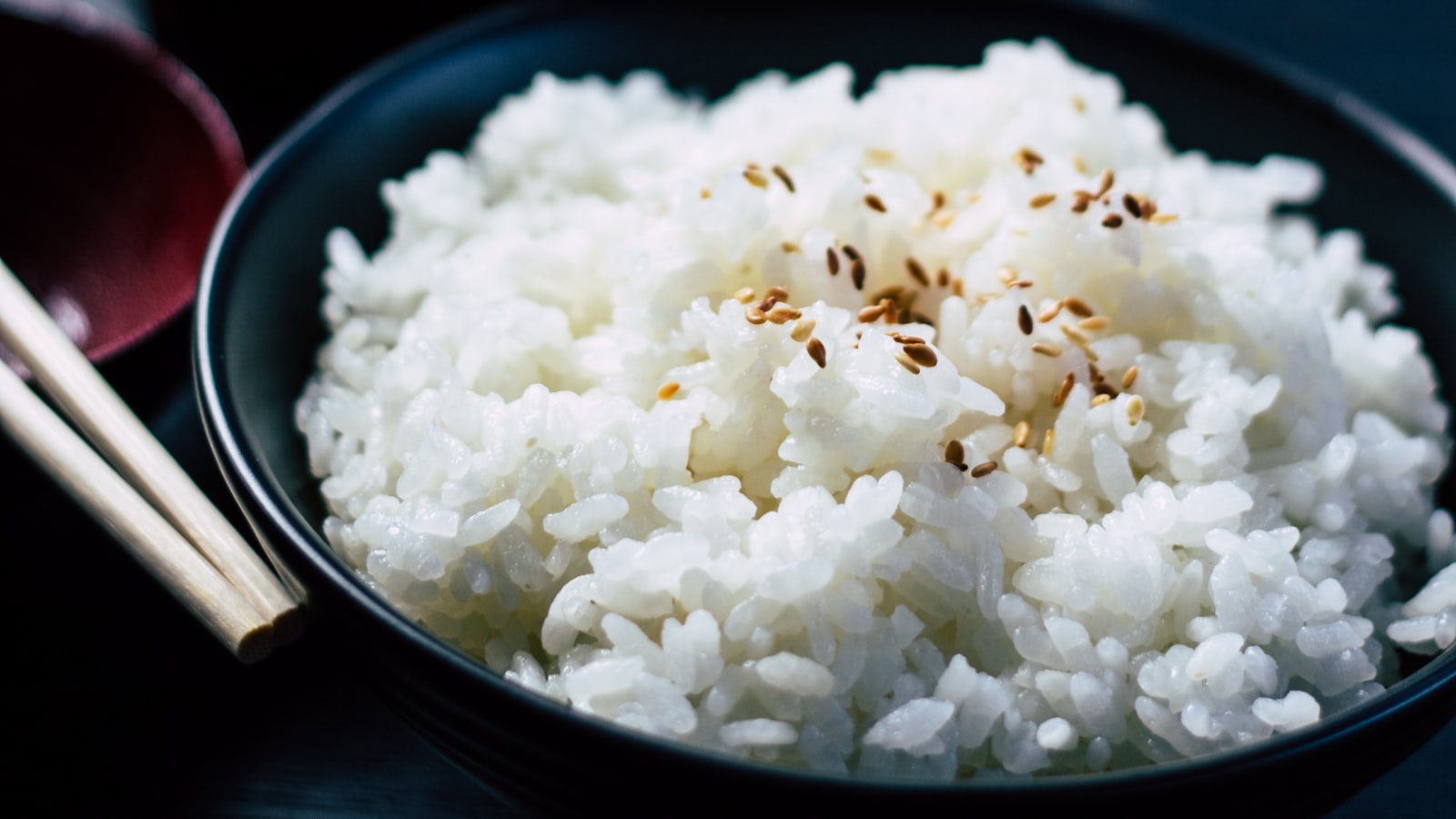
After the rest, fluff it. Use a fork, not a spoon, and lift and separate the grains gently rather than mashing or stirring. A spoon compacts and smears; a fork lifts and airs. You'll feel the difference immediately, the grains falling apart into a light, separate pile.
When it goes wrong#
Rice failures are consistent, which means they're fixable once you can name them. If your rice comes out mushy, you likely used too much water, or you didn't rinse and the loose starch turned gluey. Cut the water back a little next time and rinse until the water runs clear.
If it's scorched on the bottom and still hard on top, the heat was too high or the water ran out too soon. Your lowest burner setting might still be too aggressive, so use a heat diffuser or a heavier pot, and check your ratio. If the grains are stuck together in a clump, that's almost always skipped rinsing plus stirring, so do the first and avoid the second.
And if it's a touch undercooked, add a small splash of hot water, clamp the lid back on, and give it a few more minutes off direct high heat. Rice is forgiving that way; you can nearly always coax it the rest of the way home. Cooked rice also reheats beautifully, which makes it a quiet hero of batch-cooking meals that reheat well.
Make it yours#
Once the basic method is muscle memory, you'll stop measuring so carefully and just know when a pot looks right. That's the goal: rice becomes the reliable thing you build a meal around instead of the part you dread. Cook the same rice a few times and pay attention to how your particular pot and stove behave, because those small differences are why one person's ratio isn't always another's.
From there you can play. Toast the rinsed grains in a little oil before adding water for a nuttier flavor, cook it in stock instead of water, or stir through herbs at the end. The technique holds steady while the flavors change, and steady technique is what lets you cook without stress. Get the plain version right first, then have fun with the rest.