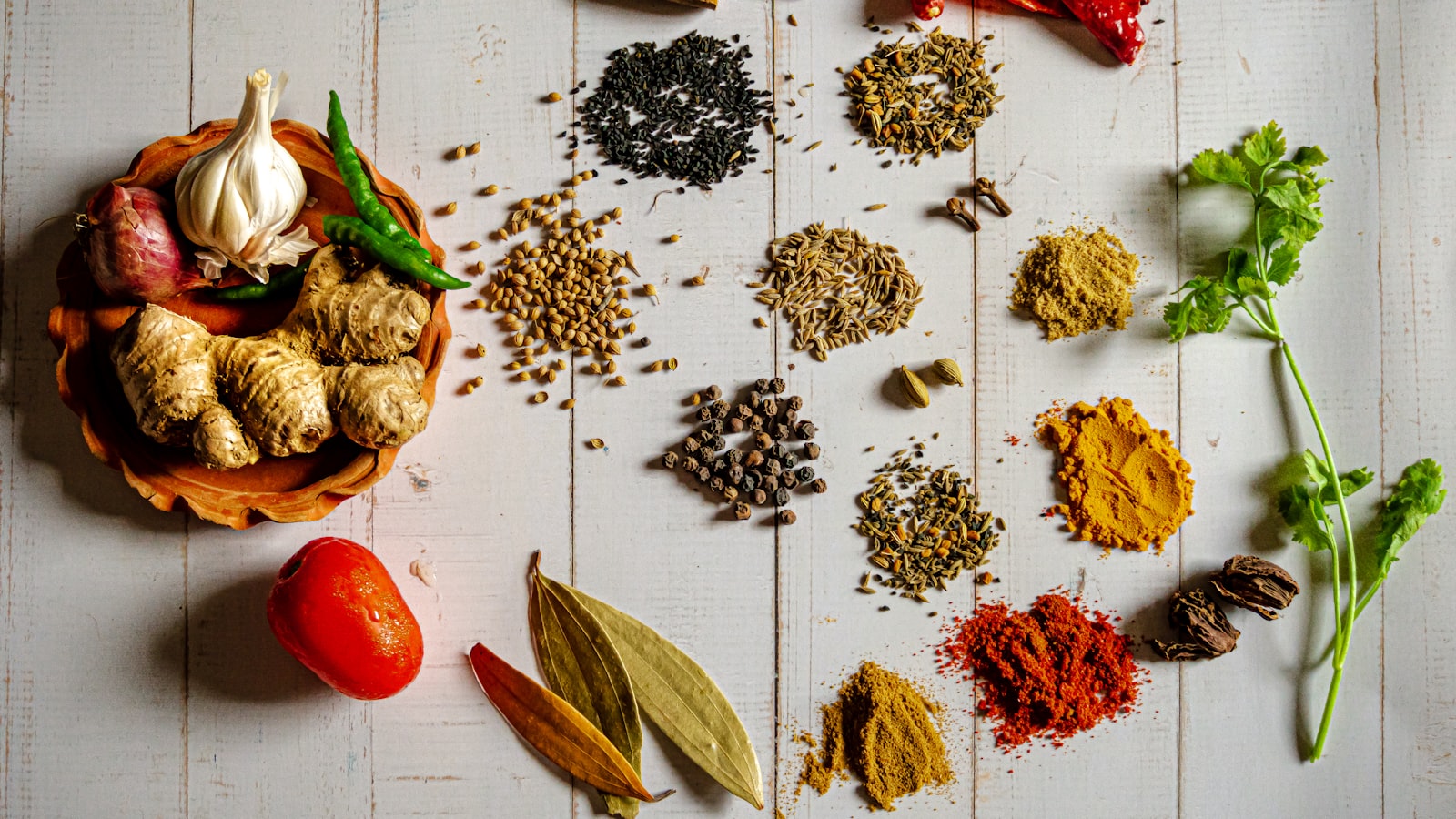
For a long time I treated the spice rack like decoration. I owned two dozen little jars, used maybe four of them, and shook a nervous pinch of something over a dish at the very end, hoping for the best. The food was fine. It was never exciting. What changed everything was learning not just which flavours to use but when to add them.
Herbs and spices are how a plain pot of the same old ingredients becomes a meal you actually crave. You do not need a huge collection or an expert palate. You need a few good jars, some fresh green things, and a sense of timing, which is the part nobody teaches you and the part that matters most.
Fresh versus dried, and when each shines#
Fresh and dried herbs are not interchangeable, and once you understand why, you stop treating them as swaps. Drying concentrates and changes a herb's flavour while stripping out its bright, volatile top notes. That makes dried herbs sturdier and better suited to long cooking, and fresh herbs livelier and better suited to the finish.
The dividing line is roughly this. Hardy herbs such as oregano, thyme, rosemary, and bay dry well and hold up to heat, so they belong in sauces, stews, and braises that simmer for a while. Tender herbs such as basil, parsley, cilantro, dill, and mint lose almost everything in the dried jar and are best used fresh, scattered on at the end where their aroma still lands.
When a recipe calls for fresh but you only have dried, or the reverse, adjust for the difference. Dried is more concentrated, so you want noticeably less of it, roughly a third as much as the fresh amount. You also add it earlier, because it needs heat and moisture to rehydrate and give up its flavour, where the fresh version would have gone in right at the finish.
If you remember one thing, make it this: dried herbs go in early to soften and release their flavour over time, while fresh herbs go in late so their brightness survives to the plate.
Bloom your spices for deeper flavor#
Spices carry their flavour in oil-soluble compounds, which is why the single most useful trick I know is to bloom them. Blooming just means warming spices in a little fat, or toasting whole ones dry in the pan, before the liquids go in. It wakes them up and spreads their flavour through the whole dish instead of leaving it locked in a raw, dusty pinch.
In practice it takes seconds. When you soften onions and garlic at the start of a dish, add your ground spices to the hot pan and stir for thirty seconds or so until they smell fragrant, then carry on with the recipe. Whole spices like cumin or coriander seed can be toasted in a dry pan first, until they turn aromatic, and then ground. Either way, watch closely, because spices go from fragrant to burnt fast, and burnt spice is bitter with no way back.
This is also why a proper curry paste or a spice-heavy sauce tastes so much rounder than a quick sprinkle of the same powders over a finished plate. The flavours have had fat and time to open up and blend into one another. You are not necessarily using more spice; you are giving what you have the conditions to actually work, and that is usually where a flat, dusty-tasting dish went wrong in the first place.
Build flavor in layers#
The biggest leap in home cooking is realising that seasoning is not a single move at the end. It is a series of small additions across the whole cook, each one building on the last. Flavour added early mellows and blends into the base; flavour added late stays sharp and distinct on top. Good dishes use both.
A simple way to layer as you go:
- At the start: bloom ground spices and add hardy dried herbs into the fat with your onions and garlic.
- In the middle: let those flavours simmer into the sauce or braise so they deepen and marry.
- Near the end: stir in tender fresh herbs and taste, adjusting with more if the dish feels flat.
- At the plate: finish with a final scatter of fresh herbs for aroma and color.
Layering like this is also where herbs and spices meet salt, because seasoning is a partnership. Spices bring flavour, salt makes that flavour audible, and the two work together across every stage. If that idea is new to you, it is worth reading alongside how to season food properly with salt, which covers the timing side of salt the same way this covers herbs.
Taste, adjust, and trust yourself#
Recipes give you a starting point, not a verdict. Herbs and spices vary in strength depending on how old they are and how they were grown, so the tablespoon of cumin that was perfect last month may need a nudge today. The only reliable instrument is your own mouth, used often.
Taste as you cook, not just at the end. If a dish seems muted, it often wants more of something warm and earthy, or a squeeze of acid, or salt, rather than simply more time. If it tips too far, a little sweetness, fat, or fresh herb can pull it back. This constant small adjusting is exactly what separates a cook from someone following instructions, and it is the same instinct that makes something like a simple pan sauce come together by feel. You get better at it the more you pay attention.
Keep them alive on the shelf#
Herbs and spices are quietly perishable, and most home cooks keep theirs far too long. Ground spices fade over months as their aromatic oils evaporate, so a jar you bought years ago is likely giving you color and little else. Whole spices last longer than ground, which is a good reason to buy whole and grind as needed when you can.
A small grinder, or even a mortar and pestle, earns its keep fast here. Freshly ground pepper, cumin, or coriander tastes worlds apart from the pre-ground jars that have been quietly fading for a year. If that feels like a step too far, at least buy ground spices in the smallest quantities you can and accept that they are a fast-moving ingredient rather than a lifetime purchase you make once and forget.
Storage is straightforward: cool, dark, dry, and sealed. That rack of jars mounted right above the stove looks charming and slowly cooks the flavour out of everything in it, so move your spices to a cupboard away from heat and light. Keep the lids tight to hold in the aromatics, and check your collection once a year, replacing ground spices that have lost their smell.
Do a quick sniff test on anything old. If a spice smells like nothing when you open the jar, it will taste like nothing in your food, and no amount will fix it. Buy smaller quantities of what you use often, keep them well, and cook from a rack that is actually alive. That, more than any single recipe, is what turns everyday ingredients into food worth sitting down for.