I spent years on a line where the oil question got answered fast and often wrong. Cooks reached for whatever bottle was closest, cranked the heat, and wondered why the pan filled with acrid smoke. Oil is not an afterthought. It is the medium that carries heat into your food, and choosing the right one is the difference between a clean, deep sear and a scorched, bitter mess.
You do not need a shelf of twelve bottles. You need to understand two things about any oil in front of you: how much heat it can take, and how much flavour it brings. Get those straight and you can walk into any kitchen and cook with confidence.
What smoke point actually means#
Every oil has a temperature at which it stops shimmering and starts smoking. That is the smoke point, and it matters because past it the oil breaks down, throws off harsh flavours, and fills your kitchen with a haze that makes everyone cough. Cross it and you are no longer cooking your food in good fat; you are cooking it in something burnt.
Refined oils generally take more heat than unrefined ones. Refining strips out the tiny particles and flavour compounds that scorch early, which is why a refined, neutral oil can handle a screaming-hot pan while a raw, green olive oil cannot. That is not a knock on either one. It just tells you what each is built for.
The practical takeaway is simple. High-heat jobs want a high smoke point. Gentle jobs and raw uses let you reach for the more delicate, flavourful oils without wasting their character in a pan hot enough to destroy it.
Smoke point is not one fixed number, either. It drifts downward as an oil ages, sits in the light, or gets reused, because each of those slowly breaks the oil down. A fresh, well-kept oil takes more heat than the same oil after months open on a warm shelf. So treat any published smoke point as a guide to how an oil behaves, not a precise line painted on the floor. Your nose and eyes, watching the pan, are the real gauge.
Neutral oils versus flavorful oils#
Oils fall into two broad camps, and knowing which one you want is half the decision.
Neutral oils get out of the way. Think refined varieties such as canola, sunflower, grapeseed, and light vegetable oils. They taste of almost nothing, tolerate high heat, and let the food be the star. These are your workhorses for frying, searing, and any dish where you do not want the oil showing up as a flavour.
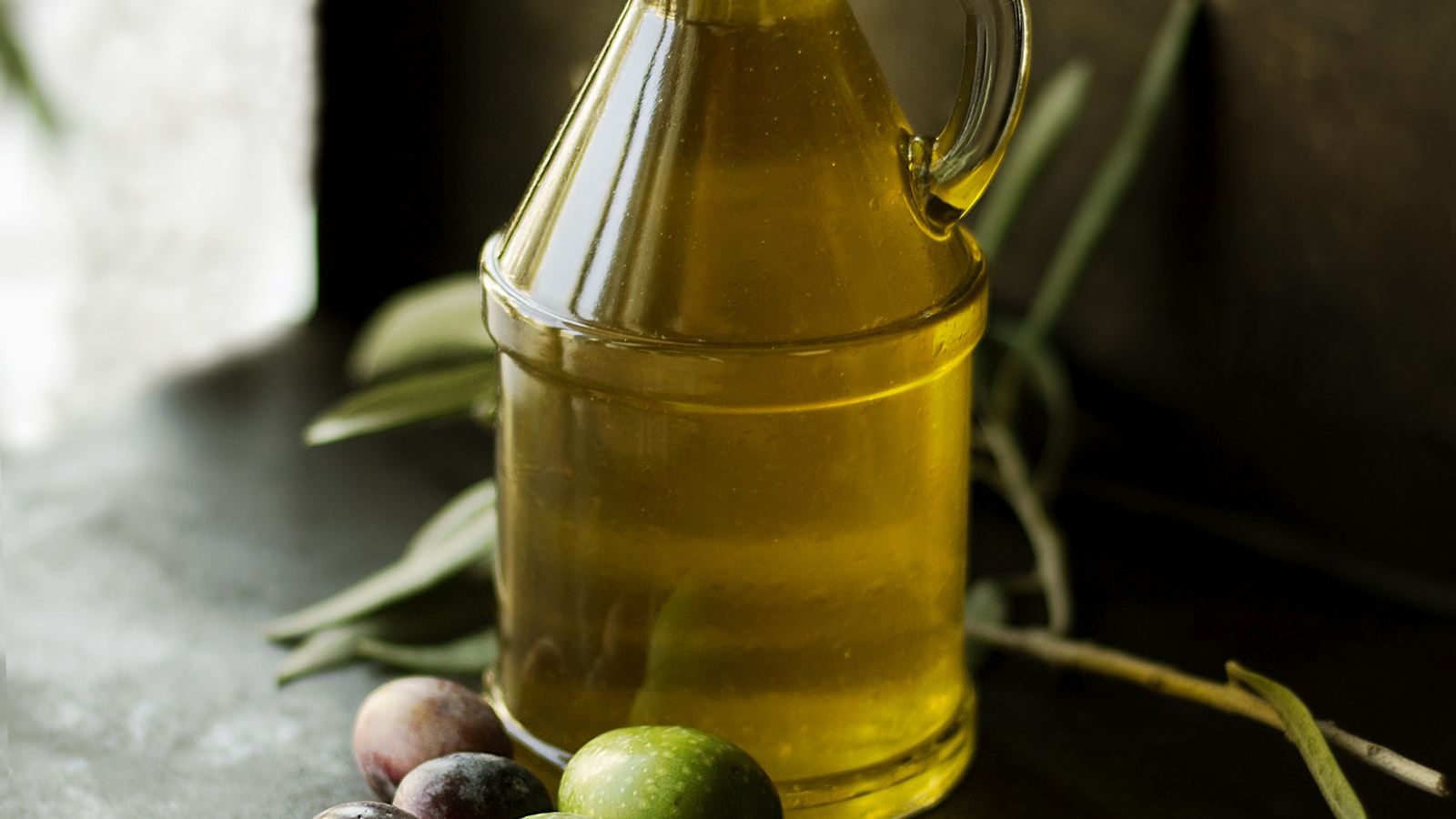
Flavorful oils are ingredients in their own right. Extra virgin olive oil, toasted sesame oil, and good nut oils carry aroma and taste you actually want to notice. You use them where their character adds something, and often you add them off the heat so that character survives.
The rule I give every new cook: neutral oil is a tool, flavorful oil is a seasoning. One does a job and disappears. The other you taste on purpose.
Which oil for which job#
Once you sort oils by heat and flavour, matching them to tasks becomes obvious. Here is how I actually reach for them:
- High-heat searing and frying: a refined, neutral oil with a high smoke point. It won't smoke out when you get a pan properly hot, which is exactly what you need to sear meat for a deep brown crust.
- Everyday sauteing and roasting: regular olive oil or a neutral oil, both comfortable at medium to medium-high heat.
- Dressings, dips, and finishing: extra virgin olive oil, drizzled raw where its fruity, peppery flavour comes through.
- A last-second accent: a few drops of toasted sesame or a good nut oil, added off the heat so the aroma stays intact.
Notice that extra virgin olive oil shows up for gentle and raw uses rather than hard frying. You can cook with it at moderate temperatures, and plenty of cooks do, but its best, most expressive flavour is wasted when you blast it. Save the good bottle for where you will taste it.
One habit turns all of this into instinct: read the oil in the pan. A mistake I saw constantly on the line was tipping cold oil into a cold pan and wandering off. Instead, let the pan warm for a moment, add the oil, and watch it. When it shimmers and slides like water, it is ready for food. When it sends up wisps of smoke, it is already too hot and about to turn bitter. Learning to judge heat by the look of the oil is one of the fastest upgrades to your cooking, whatever bottle you reached for.
Store it right or lose it#
Oil is fragile in a way people underestimate. Three things turn it rancid: heat, light, and air. Rancid oil tastes stale, faintly of crayon or old nuts, and it will drag down anything you cook in it. The good news is that decent storage is effortless.
Keep your everyday oil in a cool, dark cupboard, not on the counter next to the stove where every burner blast warms it. Choose oils sold in dark glass or tins when you can, since they shield the contents from light. Close the cap tightly after each use to limit air, and buy quantities you will actually get through in a few months rather than a giant jug that goes off before you reach the bottom.
Trust your nose. Before you cook with an oil that has sat a while, smell it. Fresh oil smells clean, green, or nutty depending on the type; rancid oil smells flat and slightly sour. If it smells off, it is off, and no dish will rescue it.
Resist the urge to top up an old bottle with new oil, too. Pouring fresh oil onto the oxidised film clinging to the neck of a bottle just spreads the staleness into the good stuff. Use up the last of an old bottle, wash and dry the container, and then refill it, or simply open a fresh one. It is a small thing that keeps every pour tasting the way it should.
Building a small, smart oil shelf#
You can cover almost everything you cook with just two bottles: one neutral, high-heat oil for the hot work, and one bottle of extra virgin olive oil for finishing and dressing. Add a small bottle of toasted sesame oil if you cook a lot of Asian-leaning food, and you are genuinely set. A tidy shelf like this also fits neatly into a pantry that cooks dinner without cluttering it.
Resist the urge to collect. Oils are not wine; they do not improve with age, and a lineup of half-used bottles slowly going rancid helps nobody. Buy a little, use it up, and keep it cool and dark. Do that, and the humble bottle of oil quietly does its job every single time you turn on the stove.