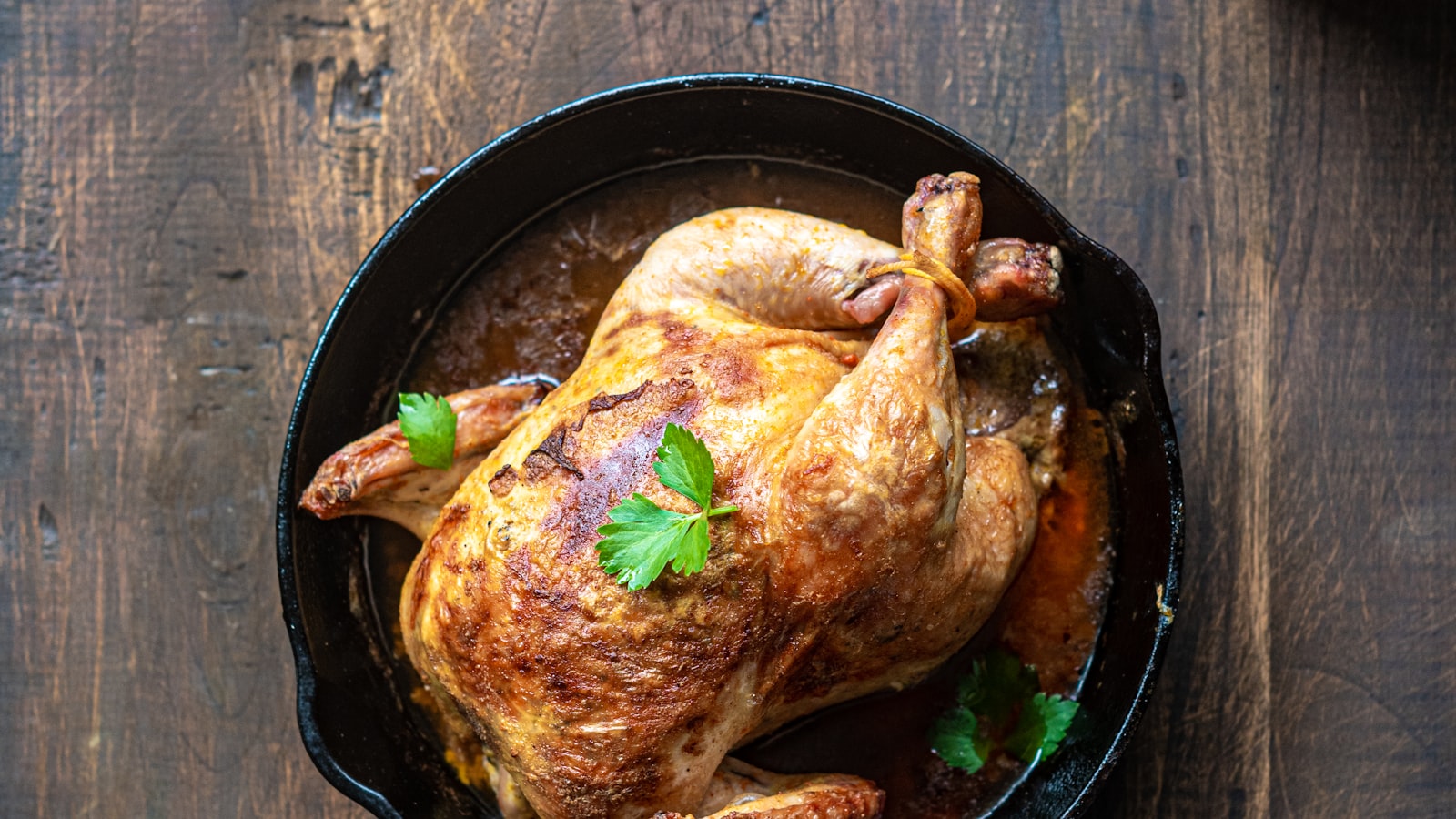
A whole roast chicken is the meal that makes a cook feel capable. It looks impressive, it feeds several people or one person for days, and the leftovers become soup, sandwiches, and a dozen other dinners. Yet plenty of home cooks find it intimidating, worried they'll dry it out or leave it underdone in the middle.
The truth is that a good roast chicken relies on a few simple decisions rather than any real difficulty. Dry the skin, salt it early, roast it hot, check it properly, and rest it. Master those five moves and you'll turn out a golden, juicy bird you can rely on for the rest of your life.
Dry it and salt it ahead#
The single biggest thing standing between you and crisp, golden skin is moisture. A wet chicken steams in the oven instead of browning, so the skin stays pale and flabby. Before anything else, pat the whole bird thoroughly dry with paper towels, inside and out. The drier the surface, the crisper the result.
Salt is the other early decision, and timing is everything. Salt the chicken generously all over, then, if you can, leave it uncovered in the fridge for a few hours or overnight. This does two jobs at once. The salt works its way into the meat and seasons it all the way through, not just on the surface. And the open air of the fridge dries the skin further, setting you up for the best browning you've ever had on a bird.
If you have no time, salting an hour ahead still helps, and even salting right before it goes in the oven is far better than not seasoning properly at all. Salting a whole chicken is one of the clearest lessons in why timing and quantity matter, and if you want to understand the principle behind it, seasoning food properly with salt explains why salt applied early tastes so different from salt sprinkled at the table.
Skip the basting. Every time you open the oven door the temperature drops and the browning stalls, and the juices you spoon over the skin just make it soggy. A dry bird left alone in a hot oven browns far better.
Rub the skin with a little oil or soft butter before roasting if you like, and add pepper or herbs, but the salt and the dry skin are the parts that truly matter.
Roast it hot#
Roast chicken wants a genuinely hot oven. Heat is what drives the browning reaction that makes the skin crisp and gives the whole bird that deep, savory, roasted flavor. Too low and the chicken cooks through before it has a chance to color, leaving you with pale, sad skin and washed-out flavor. A hot oven does the browning and the cooking together.
There are two schools of thought on positioning, and both work. You can roast the bird breast-side up the whole time for a classic look, or start it at a high heat to brown the skin and then ease off slightly to let the inside catch up without burning the outside. Either way, put the chicken on a rack or a bed of vegetables so hot air circulates underneath and the bottom doesn't sit and stew in its own juices.
This is also your chance to build a whole meal in one tin. Scatter potatoes, carrots, onions, and whatever hardy vegetables you have around the base of the chicken, and they'll roast in the rendered fat and juices as the bird cooks. The same principles that make roasted vegetables caramelize apply here, with the bonus of chicken fat basting them from above. Give them room so they roast rather than steam.
Know when it's done#
This is the step that makes people nervous, and it's the one worth taking the guesswork out of. Chicken is done when the thickest part of the meat, the joint between the thigh and the body, reaches a safe temperature and the juices run clear rather than pink. The clock is only a rough guide, because ovens vary and birds vary; judge the chicken itself, not the timer.
The most reliable tool by far is an instant-read thermometer. Push it into the thickest part of the thigh without touching bone, and when it reads a safe temperature for poultry, the bird is done. It costs little and removes the anxiety entirely.
If you don't have a thermometer, use these checks together:
- Pierce the thickest part of the thigh; the juices should run clear, not pink.
- Wiggle a leg; it should feel loose in the joint, not stiff.
- The thigh meat, not the breast, is the last part to cook, so judge doneness there.
Trust these signs over a fixed cooking time. A chicken that hits temperature early is done early, and pulling it at the right moment is what keeps it juicy rather than dry.
Rest it, then carve#
When the chicken comes out of the oven, the hardest instruction to follow is to leave it alone. Resting is not optional, and it's the step that separates juicy roast chicken from dry. As the bird cooks, its juices are driven toward the center; resting lets them redistribute back through the meat and settle. Carve immediately and those juices spill out onto the board, taking the moisture and flavor with them. Rest it, and they stay where you want them, in the meat.
Let the chicken rest somewhere warm for a good while, loosely covered with foil, before you carve. Ten to twenty minutes depending on size. Use that time to finish the vegetables, make a gravy, or set the table. The chicken stays plenty hot under foil, and the wait is repaid in every bite.
Those flavorful browned bits and juices left in the roasting tin are pure gold, and it would be a waste to scrape them into the bin. Set the tin over a burner, add a splash of liquid, and you're most of the way to a quick gravy; the method is the same one behind a simple pan sauce, and it turns the roasting tin into the best part of the meal.
A whole roast chicken rewards you far beyond the effort it asks. One bird can be Sunday dinner, Monday's sandwiches, and Tuesday's soup from the carcass. Dry the skin, salt it early, roast it hot, check it honestly, and rest it before carving. Get comfortable with those five moves and this stops being a special-occasion dish and becomes something you reach for whenever you want a proper meal with almost no fuss.